
Also known as: Congregation of the Brothers of Christian Instruction of Ploërmel; La Mennais Brothers
Post-nominal letters: FIC, FICP
This collection contains the records of the Brothers of Christian Instruction USA.
This collection is unprocessed and currently closed for research.
Founding Dates
1819
Founded by Gabriel Deshayes and John-Mary de la Mennais in France
1903
First U.S. community established in Plattsburgh, New York
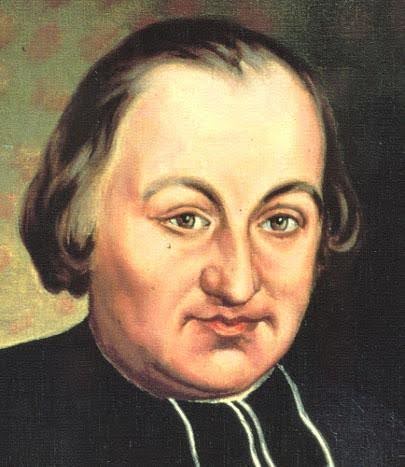
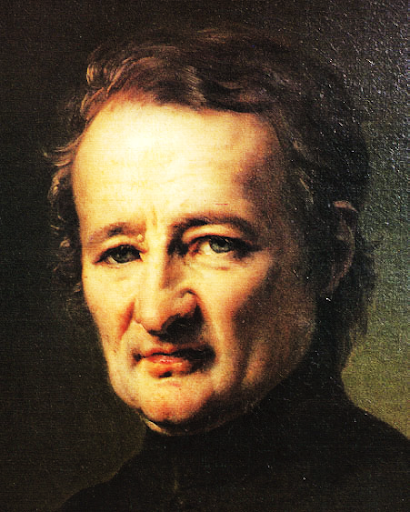
Father Gabriel Deshayes (1767-1841) and Father John-Mary Robert de la Mennais (1780-1860), Founders of the Brothers of Christian Instruction
Gabriel Deshayes was born in Beignon, Morbihan, in 1767. During the tumultuous years of the French Revolution, he was ordained as a priest in Jersey and bravely returned to France, risking his life to minister in secret. Disguised as a miller and farm laborer, he narrowly escaped multiple attempts on his life, often outwitting revolutionary soldiers. Alongside fellow priests, Deshayes conducted clandestine religious services, moving through the countryside at night and bringing comfort to Christians, demonstrating courage and resourcefulness in the face of constant danger.
In 1805, Deshayes began his pastoral work in Auray, focusing on social issues and caring for the vulnerable. He restored homes for the elderly, disabled, and abandoned children, organized work for beggars and unemployed, and established workshops for prisoners. Deeply moved by the plight of deaf and blind individuals, he entrusted girls to the Sisters of Wisdom and boys to the Saint Gabriel Brothers, expanding his efforts to include education and training for rural teachers. With Father John-Mary de la Mennais, he founded the Brothers of Christian Instruction. His dedication to helping the disadvantaged earned him a reputation for generosity and initiative among his parishioners.
Later, Deshayes became Superior General of the Montfort Fathers and Sisters of Wisdom, overseeing multiple religious and educational institutions. He managed congregations, founded schools and organizations for rural instruction, and supported the creation of new institutes. Despite his advancing age, Deshayes remained passionate about charitable works, particularly for the blind, continuing to plan projects until his death in December 1841. His legacy is marked by tireless service, leadership, and unwavering faith in Providence, inspiring generations of social and religious reformers through his example.
John-Mary de la Mennais, born in Saint-Malo in 1780, grew up amid the turbulence of the French Revolution. His family, prominent ship-owners, played a critical role in supporting the region during times of scarcity. Despite the dangers, John-Mary demonstrated courage and compassion, aiding persecuted priests as a teenager. Guided by his uncle’s extensive knowledge and spiritual mentors, he cultivated his faith and intellect. Ordained in 1804, he served as Vicar and teacher in Saint-Malo, but exhaustion led him to La Chesnaie, where he pursued further studies with his brother. Their collaborative works sparked significant discussion within the French Church.
John-Mary’s leadership became evident after the death of the Bishop of Saint-Brieuc in 1815, when he assumed charge of the diocese for five years. During this period, he revitalized Christian life by organizing retreats, missions, and supporting monastic and educational reforms. His concern for youth and education prompted him to form a group of future primary school teachers, culminating in the founding of the Brothers of Christian Instruction in 1819 with Fr. Gabriel Deshayes. He had founded the Daughters of Providence in 1817. Later, as Vicar-general in Paris, John-Mary contributed to national ecclesiastical appointments, further influencing the religious landscape of France.
Settling in Ploërmel in 1824, John-Mary expanded his educational mission, establishing schools across Brittany and advocating for justice and religious freedom. He played a pivotal role in preparing for the emancipation of slaves, sending Brothers to French colonies. His innovations in agricultural, maritime, and industrial education helped generalize primary schooling in Brittany. By the end of his life, his Institute boasted 852 Brothers and 349 schools. In 1860, after dispatching missionaries to French Polynesia, John-Mary de la Mennais passed away, leaving a legacy of faith, education, and social reform that endured well beyond his era.
Charism and Mission of the Brothers of Christian Instruction
Faithful to the calls of the Spirit and to the founding charism, the Brothers seek to reproduce the Gospel image of Jesus the Master in the midst of the children and young people to whom they are sent, he who “loved the children with whom he wished to surround himself and whom he deigned to bless”.
By their vocation as educators, the Brothers have as their mission, above all else, to spread the knowledge and love of Jesus Christ and his Gospel. From the beginning, the school has been the principal focus of their apostolic activity.
Source: Rule of Life, 2025 revised version, no. 2

Historical Sketch
The Brothers of Christian Instruction were founded in 1819 by John-Mary Robert de la Mennais and Gabriel Deshayes to provide pious teachers for children, particularly in rural Brittany. The Congregation quickly grew, with its Mother House established in Ploërmel in 1824. Despite challenging conditions, the Brothers carried the Gospel and basic education to impoverished regions, even crossing oceans to begin missions in the West Indies and Africa, guided by the zeal and vision of their Founders.
Throughout their history, the Brothers remained true to their founder’s intentions, expanding their missionary work to Guadeloupe, Martinique, Senegal, French Guyana, Saint-Pierre-et-Miquelon, Tahiti, Haiti, and later Canada. The Congregation absorbed other groups, survived official suppression in France in 1903, and continued clandestine operations. Their work flourished in Canada, Spain, England, and the United States, and later extended to Bulgaria, Turkey, Egypt, and several African and Asian countries, adapting to new challenges worldwide.
As the Congregation expanded, it adapted to changing times by strengthening its academic and spiritual formation. Missionary outreach continued into the twenty-first century, with new foundations in Indonesia, South Sudan, Mexico, and East Timor. The Brothers’ religious and apostolic heritage, recognized by papal approval in 1891, is preserved and transmitted today. Remaining devoted to the service of children and youth, the Brothers respond to contemporary needs while maintaining Christ as the central guide of their mission.
Notable Members
Blouin, Regis (Bro. Francis-Gerard). 1929-2017. His career is distinguished by a record of remarkable accomplishments. As an educator, he served as principal at multiple schools, held the position of president at Walsh University (Canton, Ohio), and founded Kisubi Brothers University in Uganda. As a religious leader, he spent twelve years as Provincial Superior of the American Province, acted as Vicar of Religious for the Diocese of Portland (Maine), participated on numerous boards in Maine and Ohio, and was published in several books and in Catholic periodicals.
Farrell, Thomas Stephen (Bro. Thomas – Stephen) 1911-1988. Teacher and administrator in parochial schools for 24 years, he became President of La Mennais College in 1955 to oversee its relocation. In 1960, he founded Walsh College (Canton, Ohio) and served as its president for 15 years. Later, he worked as assistant director of Catholic Charities (Diocese of Youngstown, Ohio), then returned to Walsh College as a French instructor and Special Assistant to the President, eventually being named President Emeritus. Brother Farrell remained active throughout his life in civic, social, cultural, educational, and religious organizations.
Gru, Joseph Gru (Bro. Salvius) 1880–1969. Between 1903 and 1911, Brother Salvius was among six brothers sent to serve missions in the American Northwest, where he founded Holy Family Mission in Montana (the second of five centers he would establish in his lifetime) before returning to Canada in 1911. In 1929, he returned to New England and opened two new centers: one in Biddeford, Maine (1929), and another in Alfred, Maine (1931). Brother Salvius was recognized for his compassion toward others, commitment to prayer, and dedication to work, highlighting his devotion as an educator.
Hebert, Aurele (Bro. Richard Marie) 1921-1978. Served as athletic director at St. Ignatius High School (Sanford, Maine) and St. Louis High School (Biddeford, Maine), later becoming assistant principal and athletic director in the Biddeford public school district until his death.
Fernand Menard (Bro. Patrick-Joseph) 1813–2006 had a distinguished religious career, serving as Provincial Superior for 18 years in the U.S. and 6 years in England. He helped found the American Province and La Mennais College, which he moved to Canton, Ohio by 1960. Menard authored several books on F.I.C. history in the U.S. and wrote a biography of Father Gabriel Deshayes, co-founder of the order.
Roulin, Desire-Celestin Constantin-Marie (Bro. Constatin-Marie) 1874-1926 An F.I.C. founder who undertook a challenging assignment, which he completed successfully. In 1905, his apostolate took place in Alaska at the Mission of Holy Cross (Sainte-Croix). Their apostolate was not easy, suffering loneliness, cold, and hunger. Like Blessed Fr. Solanus Casey, Brother was seen capable only of secondary activities, an invisible collaborator, doing chores which assured the sustainability of the mission. Three of his 5 years in Alaska, he was the sole brother, the hermit brother. His solidarity not by choice but be obedience, Bro. Constantine has achieved, in his lifetime, an entirely interior missionary epic; no great works or exceptional project only a life lived in holiness and humility according to the Mennaisian spirit.
Gelinas, Jean-Baptiste Gelinas (Bro. Denis-Antoine) 1877-1961. As founder of the American Province of the Order, Brother Denis was notable for his leadership in educational and business circles throughout New England and New York State. He became the first Canadian-born Provincial in North America, went on to establish multiple schools in New England. He purchased Shaker Village in Alfred, Maine in 1931, which later became the Mother House of the American Province in 1946.
Bibliography
Br. Edmund Raymond Drouin, The Courage of Hope, Marianum Press Ltd, Kisubi, Uganda, 2012
Br. Edmond G. Drouin, John de la Mennais 1780-1860, Lincoln Press, Sandford, Maine, 1991
Br. Philippe Friot, The Spirituality of a Man of Action (1780-1860)
Br. Bernard Gaudeul, Father de la Mennais challenges me: Extracts from his letters to the Brothers
Br. Marcel Doucet, John-Mary de la Mennais: An Anthology from his writings, 2007
Br. Miguel Angel Merino and Br. Josu F. Olabarrieta, Mennaisian Spirituality, Cosma Grafica, Rome, 2002
Br. Josu Fernandez Olabarrieta, John-Mary de la Mennais: Pathfinder, Lamennais Éditions, 2012
Br. Jean-Pierre Le Rest, John-Mary de La Mennais: A Founder’s Journal, 2020
Br. Patrick Ménard, Gabriel Deshayes (1767-1841), Lincoln Press, Sandford, Maine, 1990
Br. Parick Menard, The Brothers of Christian Instruction in the United States 1903-1981 Vol. 1, Brothers of Christian Instruction, 1981
Br. Parick Menard, The Brothers of Christian Instruction in the United States 1979-1991 Vol. II, Brothers of Christian Instruction, 1981
Br. Charles Thomas, We Remember 1903-2003, The Brothers of Christian Instruction, 2003
Br. Francis Regis Blouin, We Remember II, Brothers of Christian Instruction, 2014
For More Information:
Visit the Brothers of Christian Instruction USA at https://www.brothersofchristianinstruction.org and www.lamennais.org,